High-Volume Injection Molding & DFM Case Study
Electrical Product Development from Concept to 100,000+ Unit Production
Client: Lesco Manufacturing
Designing an injection molded product is very different from designing a product that can be manufactured reliably in high volume.
Over roughly two decades of product-development work for Lesco Manufacturing, Ben Nel developed approximately 65 electrical products and related assemblies, supporting projects from early product development through tooling, first-off-tool evaluation and commercial production.
The work combined:
injection molded plastic product design
injection molding DFM
progressive-die metal component DFM
mechanical mechanism design
Design for Assembly
electrical product packaging
tooling interaction
first-off-tool corrections
assembly and testing equipment
production support
Selected products developed through this relationship were manufactured in quantities exceeding:
100,000 Units
This case study focuses on two examples:
4-Way 232 Electrical Adaptor – 2006
Cover Strip Range – 2015
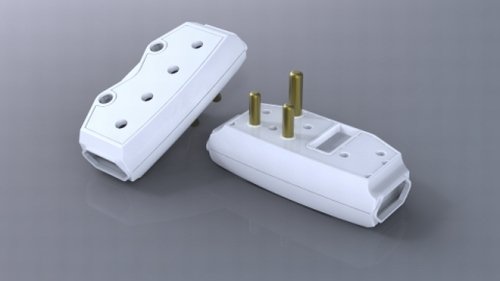
4way-232-injection-molding-dfm-case-study
Project at a Glance
Client: Lesco Manufacturing
Product category: Electrical products, adaptors, switches and related assemblies
Relationship: Long-term product development spanning roughly two decades
Products developed: Approximately 65
Selected examples: 4-Way 232 Adaptor and Cover Strip Range
Manufacturing processes: Injection molding, progressive-die metal stamping and product assembly
3DDFM / Ben Nel role: Product development, aesthetic design, plastic part design, DFM, mechanisms, Design for Assembly, first-off-tool changes and production support
Tooling: Injection mold and progressive-die tooling designed and manufactured by specialist Chinese tooling suppliers
Plastic production: South Africa
Assembly and testing: South Africa
Production volume: Selected products exceeded 100,000 units
The Manufacturing Challenge
Electrical adaptors and switches may appear relatively simple externally, but internally they can contain a large number of tightly packaged components.
These components may include:
injection molded housings
electrical contacts
stamped metal parts
switches
sliding components
rocker mechanisms
springs
terminals
fasteners
internal insulating features
All of these components must fit together correctly while meeting the requirements of the intended electrical product, manufacturing process and production assembly system.
At high production volumes, a design problem that appears minor during development can become a significant production issue.
A component that is difficult to orient, assemble or manufacture does not create a problem once.
It creates the same problem thousands of times.
This made Design for Manufacturing and Design for Assembly important throughout the development process.
Product Development from Concept Through Production
The work did not stop when the CAD model was completed.
Ben’s involvement covered the product-development process from concept through production, including:
Product and Aesthetic Design
The external appearance and product architecture had to satisfy functional, manufacturing and commercial requirements.
The product geometry also had to accommodate the electrical and mechanical components required inside each assembly.
Injection Molded Plastic Part Design
Plastic components were developed around injection molding requirements including:
practical wall sections
draft
ribs
bosses
part separation
assembly interfaces
snap and retaining features
internal component location
tooling access
manufacturable geometry
Progressive-Die Component DFM
Many of the electrical products also contained stamped metal components.
These components had to work correctly with the molded plastic parts while remaining practical for progressive-die production and repeatable high-volume assembly.
Mechanism Development
Some products included sliding and rocking mechanisms used in electrical switches and related assemblies.
The design challenge was not simply creating movement.
The mechanisms needed to:
operate consistently
fit inside a compact product
interact correctly with electrical components
be manufacturable
be assembled reliably
remain practical for high-volume production
Designing Products That Cannot Easily Be Assembled Incorrectly
One particularly important requirement was error-proof assembly.
The production environment included a diverse assembly workforce, including employees with disabilities.
Where practical, components were therefore designed so that they could only be installed in the correct orientation.
This approach is commonly described as:
Design for Assembly
mistake-proofing
error-proof assembly
assembly-orientation control
Rather than depending entirely on an assembler noticing whether a small component was facing the correct direction, the physical geometry of the product helped prevent incorrect assembly.
Examples of this design philosophy included:
asymmetric locating features
controlled component orientation
keyed interfaces
geometry that prevented incorrect insertion
clear assembly sequence
component location features
This reduced assembly ambiguity and supported more consistent production.
For high-volume products, Design for Assembly is not merely a convenience.
It can directly affect:
production consistency
assembly time
rework
testing
product reliability
Example 1: 4-Way 232 Electrical Adaptor
Developed in 2006
The 4-Way 232 Electrical Adaptor is one example from the broader Lesco product-development relationship.
The product combined injection molded plastic components with stamped electrical components and required careful packaging of the internal parts within a compact housing.
Ben’s work included:
product architecture
aesthetic design
plastic component design
injection molding DFM
DFM for stamped metal components
internal component packaging
assembly design
mechanical feature development
tooling interaction
first-off-tool review
production changes where required
The production tooling itself was designed by specialist Chinese tooling manufacturers.
Ben’s responsibility was the product and component engineering, ensuring that the parts provided to the tooling suppliers were developed around the intended manufacturing and assembly processes.
4-Way 232 electrical adaptor developed for high-volume injection molded production
Why First-Off-Tool Review Matters
A production-ready CAD model does not mean the engineering work necessarily ends when the mold is manufactured.
Once the first production parts are molded, the real components can reveal issues that were difficult to predict completely in CAD.
These may involve:
fit
assembly
shrinkage
component alignment
snap engagement
interference
tolerances
cosmetic surfaces
mechanism movement
Ben remained involved during first-off-tool evaluation and corrective product changes.
This experience is important because successful injection molded product development requires understanding not only how a component should look in CAD, but also how the molded part behaves when it comes out of a real production tool.
Example 2: Lesco Cover Strip Range
Developed in 2015
The Cover Strip Range is another example of a product family developed for injection molded production.
The underlying product direction came from the client.
Ben’s role was to translate that direction into detailed, production-ready product geometry.
The work included:
product development
aesthetic refinement
injection molded part design
injection molding DFM
internal packaging
assembly development
product detailing
tooling interaction
first-off-tool changes
production support
The Cover Strip concept was client-led and is not presented as an invention by 3DDFM or Ben Nel.
3DDFM’s contribution was the engineering and product development required to turn the concept into manufacturable products.
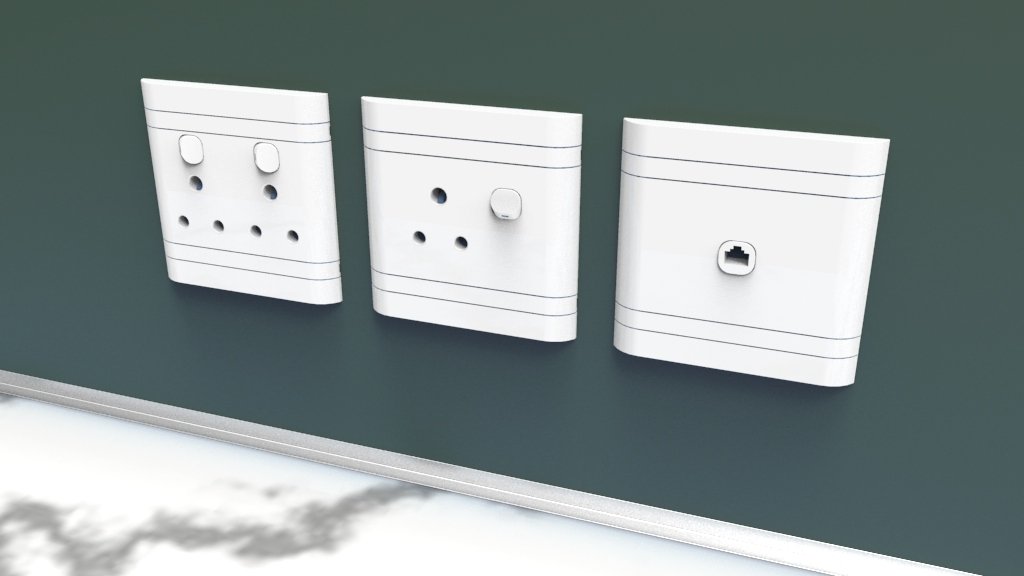
Lesco Cover Strip Range injection molded electrical product design
Designing Around Electrical Product Requirements
Electrical products introduce constraints that go beyond appearance and injection molding alone.
The Lesco work required product geometry to be developed around relevant South African electrical product and safety requirements.
This affected areas such as:
component separation
electrical contacts
insulating geometry
terminal access
mechanical protection
assembly
product architecture
The responsibility of the product designer is therefore not simply to create an attractive plastic housing.
The mechanical design, electrical components, assembly process and manufacturing method must function together as a complete product system.
Tooling and International Manufacturing Coordination
For these Lesco products, the injection molds and progressive-die tooling were designed and manufactured by specialist suppliers in China.
Ben did not design the Lesco production tooling.
Instead, his role included developing the product geometry for manufacturing and remaining involved as the designs moved through tooling and first production parts.
This distinction is important.
Effective DFM requires collaboration between:
Product Designer → Toolmaker → Manufacturer → Assembly Operation
Toolmaker feedback may result in modifications to:
part geometry
split lines
draft
undercuts
steel conditions
ejector access
stamped-part geometry
assembly features
The objective is to maintain the product’s function and appearance while making the parts practical to manufacture reliably.
Production Assembly and Testing
Product development also extended into the production environment.
Ben designed:
assembly jigs
production fixtures
testing jigs
for products developed during the Lesco relationship.
This created a direct connection between product design and the way the product would eventually be:
manufactured → assembled → tested → released
That production exposure strongly influenced the Design for Manufacturing approach used in later projects.
A product should not only be easy to mold.
It should also be practical to:
assemble
inspect
test
package
maintain in repeatable production
What Does This Case Study Demonstrate?
Have you designed injection molded products that reached high-volume production?
Yes.
Selected products developed during the Lesco relationship were manufactured in quantities exceeding 100,000 units.
The work covered product development from concept through injection molding DFM, tooling interaction, first-off-tool corrections and production support.
Can you take a plastic product from concept toward injection mold tooling?
Yes.
The Lesco work included product architecture, injection molded component design, manufacturing preparation, toolmaker interaction and evaluation of first production parts.
For new plastic products preparing for tooling, see our:
Injection Molding Design Service
Do you have experience with Design for Assembly?
Yes.
Assembly was a significant engineering consideration across the Lesco product range.
Many components were intentionally designed with orientation and locating features that reduced the possibility of incorrect assembly.
This was particularly important for products containing multiple small electrical and mechanical components.
Do you design injection molds?
3DDFM has injection mold design experience, but the tooling for the Lesco products shown in this case study was not designed by Ben Nel.
Specialist Chinese toolmakers designed and manufactured those molds.
Ben designed the products and remained involved through tooling feedback, first-off-tool evaluation and production changes.
A separate 3DDFM case study demonstrates a commercial electronic enclosure where Ben designed the complete injection mold tooling.
Electronic Enclosure & Mold Design Case Study
What happens after the injection mold is built?
First-off-tool or T1 parts should be reviewed against the engineering requirements before production is approved.
Typical checks include:
dimensions
fit
assembly
warpage
sink
surface quality
snap features
mechanism operation
component alignment
Changes discovered at this stage may require product modifications, tooling corrections or both.
The objective of strong DFM is to identify as many risks as possible before tooling, while still allowing the design team to respond intelligently to what is learned from real molded parts.
When should DFM be performed?
Ideally, Design for Manufacturing should begin before production tooling is ordered.
The later major manufacturing problems are identified, the more expensive they normally become to correct.
If a product already exists in CAD and you need an independent manufacturing review before committing to tooling, see:
Design for Manufacturing Consulting
From Injection Molding Guidelines to Real Production
Successful injection molded product development requires more than following a checklist.
Wall thickness, draft, ribs, bosses, undercuts, assembly features and tooling strategy interact with one another as part of the complete product.
For technical guidance on these subjects, see:
Injection Molding Design Guidelines
This case study demonstrates how those manufacturing principles form part of real product development at commercial production volumes.
Need an Injection Molded Product Prepared for Production?
3DDFM supports companies developing plastic products that need to move from concept or prototype toward tooling and production.
Our work can include:
product development
injection molding DFM
production-ready CAD
Design for Assembly
mechanical mechanisms
electronic component packaging
toolmaker interaction
first-off-tool evaluation
production design changes
Injection Molding Design Service
Design for Manufacturing Consulting
More Production-Proven Engineering Case Studies
See additional real manufacturing examples covering electronic enclosures, injection mold tooling and sheet metal product engineering.