Sheet Metal Product Engineering & DFM Case Study
From Product Architecture to Fabrication, FEA and Production Documentation
Client: Turnstar Systems
Sheet metal product development involves much more than converting a solid CAD model into bent panels.
Successful fabricated products need to account for:
material selection
bending
welding
structural performance
mechanisms
assembly
fabrication tolerances
weight
transport
installation
manufacturing documentation
Between approximately 2016 and 2021, Ben Nel and the 3DDFM team worked on approximately 20 products for Turnstar Systems, a manufacturer of physical access-control equipment.
The engineering work covered:
aesthetic product design
sheet metal DFM
structural development
mechanism design
FEA
weight optimisation
transport optimisation
site-assembly optimisation
welding and assembly considerations
full manufacturing drawing packs
BOMs
DXF manufacturing profiles
welding drawings
production CAD
This case study focuses on two products developed in 2020:
Triton Full Height Curved – Major Redesign
Fusion Full Height Octagonal – New Product Design
Both products progressed into commercial manufacture and remain part of Turnstar’s product offering.
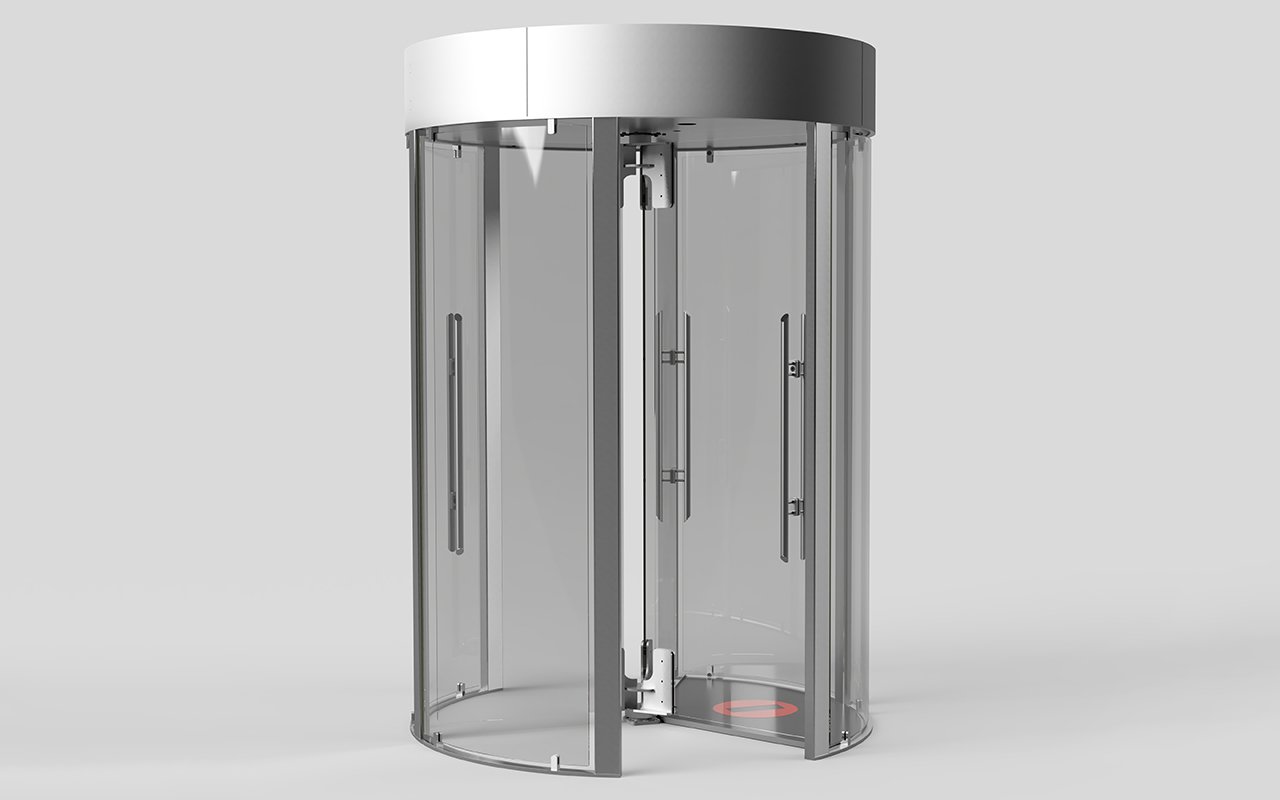
Turnstar Triton Full Height Curved sheet metal product engineering and DFM
Project at a Glance
Client: Turnstar Systems
Relationship: Approximately 2016-2021
Products developed: Approximately 20
Selected case-study products: Triton Full Height Curved and Fusion Full Height Octagonal
Year: 2020
Primary manufacturing discipline: Sheet metal fabrication and welded mechanical assemblies
Materials used across Turnstar projects: Mild steel, stainless steel 304 and stainless steel 316
3DDFM role: Product design, sheet metal DFM, mechanisms, structural engineering, FEA and production documentation
Manufacturing documentation: Developed by Ben Nel and Armandt
Production status: Both selected products remain commercial products
Production quantity: More than 20 units of each selected design
Market: Products offered to international markets
The Sheet Metal Engineering Challenge
Large fabricated products create a different set of engineering challenges from injection molded or machined components.
A sheet metal assembly may contain:
formed panels
welded frames
structural members
moving mechanisms
bearings
pivots
fasteners
electrical equipment
covers
glass or other secondary components
These parts must work together while remaining practical to:
Cut → Form → Weld → Assemble → Transport → Install → Maintain
A product can look correct in CAD but still be difficult or expensive to manufacture if these downstream operations have not been considered.
This is why sheet metal DFM needs to begin during product development rather than only when manufacturing drawings are created.
Engineering Beyond Individual Sheet Metal Parts
The Turnstar work involved complete products rather than isolated brackets or panels.
This required coordination between:
product appearance
structural requirements
moving mechanisms
fabrication
welding
assembly
installation
manufacturing tolerances
The objective was not simply to make each individual part manufacturable.
The complete assembly needed to function as a practical production product.
Sheet Metal Design for Manufacturing
Sheet metal components were developed around real fabrication constraints.
Typical considerations included:
material thickness
bend geometry
bend radius
flange dimensions
fabrication access
welding
fastener location
assembly sequence
alignment
manufacturing tolerances
practical part geometry
Design decisions also had to consider how individual fabricated parts interacted once they became part of a welded or mechanically assembled structure.
Poor DFM in one component can create problems throughout the complete assembly.
Examples may include:
misaligned holes
inaccessible welds
difficult bend sequences
accumulated tolerance errors
poor mechanism alignment
unnecessary part count
excessive weight
Example 1: Triton Full Height Curved
Major Redesign – 2020
The Triton Full Height Curved project involved a major redesign of an existing commercial product.
The challenge was not simply creating a new appearance.
The product had to integrate the mechanical, structural, fabrication and aesthetic requirements into a production-ready assembly.
The engineering work included:
major product redesign
aesthetic development
sheet metal DFM
structural engineering
mechanism integration
fabrication development
FEA
production CAD
complete manufacturing documentation
Structural Design and FEA
Large mechanical access-control products must support their own structure while maintaining accurate alignment of the moving mechanisms.
Ben performed Finite Element Analysis (FEA) on the Triton Full Height Curved during development.
FEA was used to evaluate critical structures and components as part of the engineering process.
This allowed structural decisions to be assessed before committing the product to fabrication.
FEA can be useful when evaluating questions such as:
Is the structure sufficiently stiff?
Where are the highest stresses?
Can material be removed safely?
Is a component unnecessarily heavy?
Does a mounting area need reinforcement?
FEA does not replace practical engineering judgement or production validation.
It is a tool used to support engineering decisions.
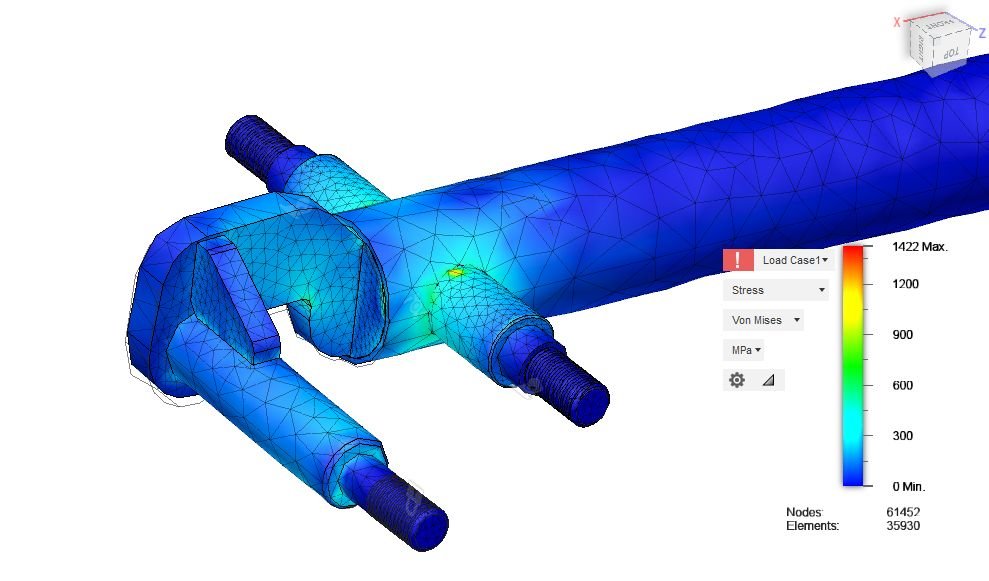
FEA analysis of critical structure on Turnstar fabricated product
Weight Optimisation
Weight affects more than material cost.
For large fabricated products, excessive weight can influence:
manufacturing
handling
shipping
installation
site labour
structural support
The Turnstar work therefore included optimisation aimed at reducing unnecessary weight without compromising required structural performance.
This requires looking at the complete product rather than simply making every panel thinner.
Changes may involve:
material thickness
structural geometry
folded sections
reinforcement locations
component architecture
The objective is to place material where it contributes most effectively to the structure.
Designing for Transport and Site Assembly
Large products also need to reach the customer.
A design that works perfectly when fully assembled in CAD may become expensive or difficult to ship.
The Turnstar projects therefore included consideration of:
transport size
component weight
assembly sequence
installation access
site handling
final alignment
Where practical, product architecture was developed to make transportation and site assembly more manageable.
This is an important part of Design for Manufacturing because manufacturing does not end when a product leaves the factory.
For large equipment, logistics and installation are part of the complete product system.
Mechanism Design
Turnstiles and access-control products contain mechanical systems that must move consistently while remaining integrated into the surrounding fabricated structure.
Mechanism development can involve:
pivots
bearings
shafts
linkages
rotating assemblies
locking systems
stops
mechanical interfaces
These mechanisms depend on the accuracy and stiffness of the fabricated structure around them.
This creates an important relationship:
Structure → Mechanism Alignment → Assembly → Product Function
Sheet metal and welded-frame tolerances must therefore be considered together with the moving components.
Example 2: Fusion Full Height Octagonal
New Product Design – 2020
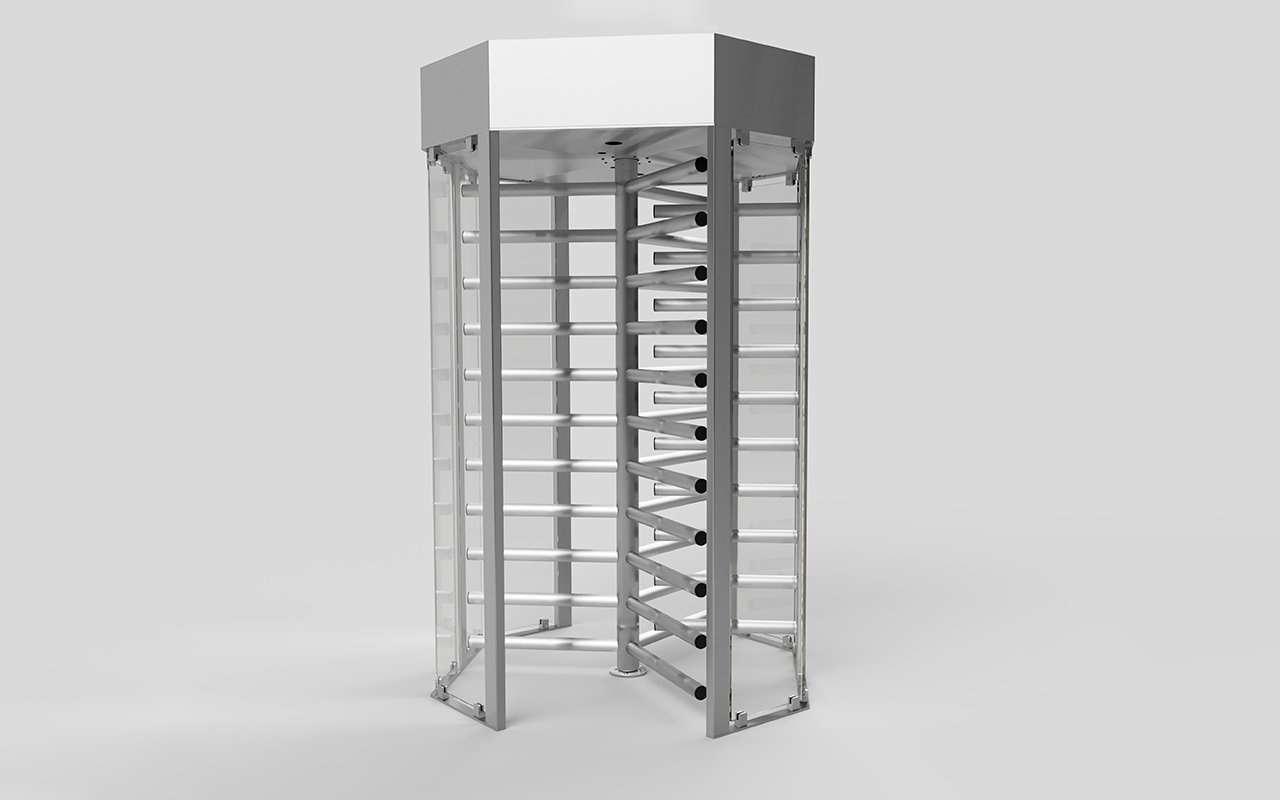
The Fusion Full Height Octagonal demonstrates a different type of engineering work.
Rather than a major redesign of an existing product, the Fusion was developed as a new commercial product design.
The work included:
new product architecture
aesthetic development
sheet metal DFM
structural design
mechanism development and integration
FEA
fabrication engineering
manufacturing optimisation
production CAD
complete manufacturing documentation
Materials and Fabrication
Turnstar products developed during the working relationship included:
mild steel
stainless steel 304
stainless steel 316
Material selection affects:
corrosion resistance
product environment
appearance
fabrication
welding
weight
cost
The correct material cannot be selected from appearance alone.
The operating environment, fabrication process and required product life all influence the decision.
Welding and Assembly Engineering
Fabricated products often depend heavily on welding.
Welded structures introduce engineering considerations such as:
access for welding
distortion
alignment
fixture requirements
heat input
assembly sequence
inspection
The Turnstar work included the design of welding and assembly jigs on applicable projects.
Fixtures help locate components consistently during fabrication and can improve production repeatability.
This is particularly valuable when the final product includes mechanisms or interfaces where misalignment can affect operation.
Complete Manufacturing Documentation
A production-ready sheet metal product requires more than a STEP file.
For the selected Turnstar projects, Ben Nel and Armandt developed the manufacturing documentation required to support production.
Deliverables included:
production CAD
detailed manufacturing drawings
Bills of Materials
DXF manufacturing profiles
welding drawings
assembly information
The purpose of this documentation is to translate the engineering design into information that the fabrication and assembly teams can actually use.
What Files Does a Sheet Metal Manufacturer Need?
The exact deliverables depend on the fabricator and production process.
A typical production package may include:
STEP files
fabrication drawings
flat-pattern information
DXF profiles
material specifications
thickness information
bend details
tolerances
welding information
BOMs
assembly drawings
Providing only a 3D CAD model may leave important production decisions undefined.
Good manufacturing documentation removes ambiguity between the designer and manufacturer.
What Does This Case Study Demonstrate?
Have you designed sheet metal products that reached commercial production?
Yes.
3DDFM worked on approximately 20 products for Turnstar Systems between 2016 and 2021.
The Triton Full Height Curved and Fusion Full Height Octagonal selected for this case study both entered commercial manufacture.
More than 20 units of each selected product have been manufactured.
Are these products still being manufactured?
Yes.
Both selected designs remain part of Turnstar’s commercial product range and are offered to international markets.
Can you design complete sheet metal assemblies rather than individual parts?
Yes.
The Turnstar work involved complete fabricated mechanical products incorporating:
sheet metal components
welded structures
mechanisms
structural elements
assembly systems
manufacturing documentation
The engineering work therefore considered the product as a complete manufacturing system rather than as isolated sheet metal parts.
Can FEA be used to reduce weight in a sheet metal product?
Yes, where appropriate.
FEA can help identify:
highly stressed areas
low-stress material
deflection
structural weaknesses
This information can support decisions about material thickness, reinforcement and product architecture.
However, FEA should be used together with practical manufacturing knowledge and the real operating requirements of the product.
How do you make a large sheet metal product easier to transport?
Transport should be considered during product architecture.
Possible design considerations include:
dividing large assemblies into practical modules
reducing unnecessary weight
simplifying final site assembly
controlling the size of shipping components
designing repeatable locating and fastening features
The correct approach depends on the specific product.
Is my sheet metal design manufacturable?
A manufacturability review should consider more than whether the CAD software can create a flat pattern.
Important questions include:
Are the bend radii practical?
Are flanges long enough for forming?
Are holes positioned safely relative to bends?
Can the part be held and formed?
Is the bend sequence realistic?
Are welds accessible?
Are tolerances practical?
Will all components align during assembly?
Is the product unnecessarily complex?
For products preparing for fabrication, see:
When should sheet metal DFM be performed?
Ideally before the design is released for production.
Early review gives the engineering team more freedom to simplify geometry, improve assembly and remove fabrication risks.
If the CAD already exists and you need an independent manufacturing review before production, see:
Design for Manufacturing Consulting
Practical Sheet Metal Design Questions
How close can a hole be to a bend?
The correct distance depends on:
material
thickness
bend radius
hole size
forming method
Holes placed too close to a bend can distort during forming.
This should therefore be checked against the actual fabrication process rather than relying on a single universal value.
What bend radius should I use?
The required bend radius depends on material type, material thickness, grain direction and the fabrication equipment being used.
A common mistake is specifying a bend radius that looks acceptable in CAD but does not match the manufacturer’s available tooling.
The production fabricator should therefore confirm the final bend assumptions.
Should I use 304 or 316 stainless steel?
The correct choice depends primarily on the operating environment and corrosion requirements.
304 stainless steel is widely used for general-purpose applications.
316 provides improved corrosion resistance and may be preferred for more aggressive or corrosive environments.
The choice should also consider fabrication, welding, availability and cost.
From Sheet Metal Design Guidelines to Production Engineering
Successful fabricated products require the interaction of:
part geometry
material
bending
welding
structure
mechanisms
assembly
fabrication tolerances
For an initial manufacturability check, see:
For the core engineering service, see:
The Turnstar case study demonstrates how these manufacturing principles were applied to complete commercial mechanical products rather than isolated sheet metal components.
Need a Sheet Metal Product Prepared for Production?
3DDFM supports companies developing fabricated products that need to move from concept, prototype or existing CAD into manufacturing.
Our work can include:
sheet metal product design
DFM
product architecture
mechanism development
structural engineering
FEA
weight optimisation
Design for Assembly
fabrication drawings
BOMs
DXF manufacturing files
welding documentation
Design for Manufacturing Consulting
More Production-Proven Engineering Case Studies
See additional real manufacturing examples covering high-volume injection molded products and commercial electronic enclosures.
View Manufacturing Case Studies
Related case study: High-Volume Injection Molding & DFM – Lesco Manufacturing
Related case study: Electronic Enclosure & Injection Mold Design – Romulus Energy