Help with Invention Ideas: From Sketch to Factory-Ready Product
If you’re looking for help with invention ideas and want to turn your concept into a manufacturable product, this guide will show you how.
Key Takeaways
3DDFM (BP Nel Consulting) combines industrial design, Design for Manufacture (DFM), and 3D printing services under one roof, cutting product development timelines by weeks or months while preventing costly redesigns.
Design for Manufacture (DFM) means designing products so they can be efficiently and cost-effectively produced at scale.
Industrial design is the process of developing the form, function, and usability of a product, balancing aesthetics with practical engineering requirements.
Having a single partner handle design, DFM optimization, and rapid prototyping eliminates handoff delays and miscommunication between separate vendors—saving both time and money.
This guide provides a practical roadmap from clarifying your invention idea through industrial design, DFM, prototyping, tooling decisions, and production planning.
With 30+ years of product development experience across medical devices, automotive, industrial equipment, and consumer electronics, 3DDFM focuses on cost-effective, manufacturable solutions using processes like injection molding, sheet metal fabrication, and die casting.
Whether you’re working from rough sketches or early CAD files, 3DDFM can help you create a manufacturable product—contact us to turn your idea into a factory-ready design.
Table of Contents
Introduction
This guide is for inventors, startups, and engineering teams who want to turn their invention ideas into real, manufacturable products. We’ll walk you through every step of the process—from clarifying your idea and protecting your IP, to industrial design, prototyping, and planning for production. Whether you’re starting from a sketch or an early CAD file, you’ll find practical advice and examples to help you succeed.
Do You Have an Invention Idea and Need Help Getting Started?
You have a concrete invention idea—maybe it’s a new medical device attachment, a safer power tool guard, or a smart home sensor. You can picture it in your mind. You might even have a concept sketch on paper or a loosely outlined tasks list of what it needs to do. But when it comes to figuring out how to actually turn your idea into something you can manufacture and sell, the path forward is unclear.
This is where most inventors get stuck. Not knowing which materials or processes to use, uncertainty about costs, confusion around prototypes vs. production tooling, and the fear of wasting money heading in the wrong direction—these obstacles stop many ideas from ever reaching the market.
3DDFM (BP Nel Consulting) offers a practical, engineering-driven alternative to generic “invention promoter” services. We don’t just tell you your great idea has potential. We focus on getting your invention technically viable, manufacturable, and ready for serious investors or internal approval. Here’s what we help with:
Industrial design that balances aesthetics, ergonomics, and production realities
Design for Manufacture (DFM) optimization for injection molding, sheet metal, die casting, and more
3D CAD modeling with parametric designs tailored to your chosen manufacturing process
3D printed prototypes for rapid validation and stakeholder presentations
Preparation of manufacturing-ready drawings, BOMs, and documentation
A Bill of Materials (BOM) is a detailed list of all components and materials needed to manufacture a product.
This article will walk you through a realistic invention process you can follow in 2024–2025 to move from just an idea to a factory-ready design. We’ll cover everything from framing your concept through DFM, prototyping, and planning for production—with specific examples and actionable guidance throughout.
Clarify and Frame Your Invention Idea
Before you open CAD software or order prototype materials, you must precisely define what your invention does, for whom, and why it matters. This isn’t just philosophical—it directly impacts every downstream decision about materials, manufacturing processes, and costs.
A well-framed invention idea might sound like this: “A modular injection-molded handheld enclosure for an IoT sensor that must survive IP65 outdoor conditions and be assembled in under 2 minutes.” That single sentence captures the user context, manufacturing approach, performance requirements, and assembly constraints.
Questions Every Inventor Should Answer
Before investing in development, work through this checklist (and consider Design for Manufacture):
Question | Why It Matters |
|---|---|
Who is the user in 2025? (Surgeon, maintenance tech, home DIYer) | Determines ergonomics, interface design, and durability requirements |
What exact problem does it solve? | Guides feature prioritization and helps you conduct research on competing solutions |
What environment will it operate in? (Sterile theatre, factory floor, dusty construction site) | Dictates material selection, sealing requirements, and environmental testing |
What does success look like? (Reduce assembly time by 30%, cut weight by 20%, improve ergonomics) | Creates measurable goals for design validation |
What’s the target manufacturing volume? (500 units/year vs. 50,000 units/year) | Fundamentally changes tooling and process decisions |
Start Simple Before Going Complex
Resist the urge to jump straight into complex 3D models. Start with:
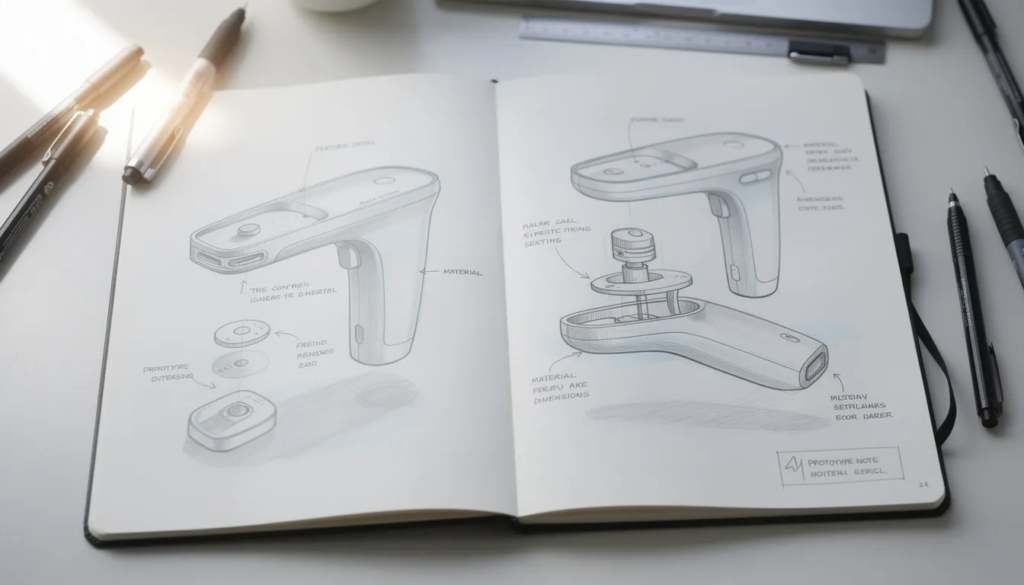
Quick hand sketches exploring different form factors
Simple cardboard or foam mock-ups to test size and grip
A 1–2 page problem statement capturing requirements and constraints
At 3DDFM, we typically begin projects with a structured discovery call and a written design brief. This document captures your design vision, technical requirements, constraints (size, weight, regulatory), and target volumes. Getting this right at the start prevents expensive course corrections later.
Document, Protect, and Research Your Invention
Documenting and researching your invention idea early serves two purposes: it helps with intellectual property protection, and it helps you make better design decisions by understanding what already exists in the market.
Simple Documentation Approach
You don’t need elaborate systems to create a useful paper trail. Focus on:
Dated design notebook: Use a bound notebook with numbered pages. Date each entry and describe your invention’s concept evolution, design decisions, and test results.
Digital files with version control: Save CAD files, sketches, and documents with clear naming conventions and dates. Cloud storage with version history works well.
Photos of physical models: Document every physical model you build, including cardboard mock-ups and 3D printed prototypes.
Email and meeting notes: Save correspondence that shows the development timeline of your new invention.
This inventor’s journal approach creates evidence of your development process—useful for both intellectual property protection discussions and for tracking what you’ve already tried.
Conduct Market and Prior Art Research
Before investing heavily in development, spend time understanding what already exists:
Search patent databases like the United States Patent and Trademark Office (USPTO) and European Patent Office (EPO) for similar ideas
Review existing products online, focusing on functionality and manufacturing approach—not just appearance
Look for gaps in current solutions that your invention addresses
This product research phase helps you avoid reinventing something that already exists and may reveal opportunities to differentiate your approach. If you find a similar idea, that’s not necessarily bad news—it validates market need and helps you understand what improvements could make your solution stand out.
Setting Realistic Expectations About Patents
3DDFM is not a law firm and does not provide legal advice. However, we regularly work with inventors who are pursuing intellectual property protection, and our DFM-oriented design work supports those efforts.
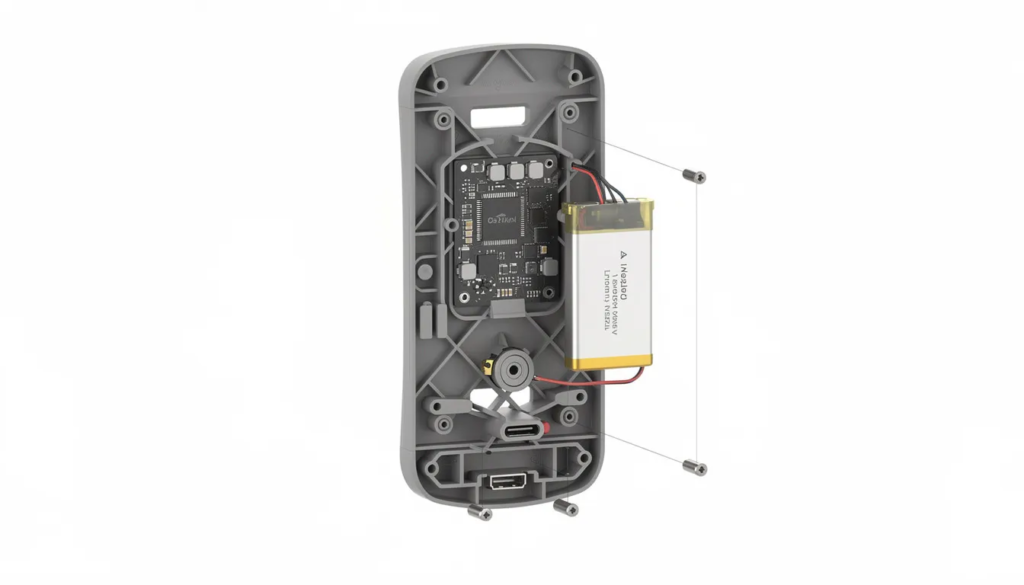
Our detailed CAD models, exploded views, and manufacturing-ready drawings can help illustrate inventive features when working with your patent attorney.
In the US, inventors typically have a 12-month provisional patent window after filing to refine their design and DFM while IP counsel works on the full patent application. Use this time wisely—it’s an opportunity to improve your design without rushing the early filing decision.
Translate Your Idea into Industrial Design and 3D CAD
Industrial design is the bridge between your concept and engineering reality. It defines form, ergonomics, user interaction, and how components fit together—all while respecting manufacturing realities. Think of it as an art form that balances aesthetics with practical constraints.
At 3DDFM, we use modern CAD tools like SOLIDWORKS and Fusion 360 to create fully parametric 3D models, assemblies, and configurations tailored to your chosen manufacturing process. Whether you’re designing for injection molding, sheet metal fabrication, die casting, blow molding, or 3D printing, the CAD approach differs based on process-specific requirements.
Real-World Industrial Design Examples
Here’s what this looks like in practice:
Application | Design Considerations |
|---|---|
Medical device housing with snap-fits | Designed for injection molding with proper draft angles, uniform wall thickness, and snap-fit geometry that accounts for material deflection |
Sheet metal control panel | Correctly sized bend radii, grain direction considerations, and hole-to-edge distances that work with standard fabrication equipment |
Industrial equipment frame | Extruded aluminum profiles with mounting provisions, designed for easy assembly and future serviceability |
Leveraging Digital Blueprints and Templates
Our digital blueprints and CAD templates include common elements like ribs, bosses, mounting points, and draft angles for various manufacturing processes. These resources help teams avoid beginner mistakes and accelerate the initial design phase.
Beyond aesthetics, good industrial design addresses:
Tolerances: How parts fit together across a range of manufacturing variation
Assembly strategy: The sequence for putting components together efficiently
Serviceability: Designing for easy replacement of components like sensor modules or battery packs
Getting these details right during the design phase prevents expensive redesigns once tooling is underway.
Design for Manufacture (DFM): Making the Invention Affordable to Produce
Design for Manufacture means designing your invention so it can be consistently produced at scale using real-world processes—without surprise costs, cosmetic defects, or assembly problems. It’s the difference between a product idea that looks good in CAD and a successful product that actually works on a production line.
Making DFM decisions early during CAD development can reduce tooling changes and rework dramatically. We’ve seen clients save thousands of dollars and several weeks by addressing these issues before molds or dies are ordered.
DFM Considerations by Manufacturing Process
Here are specific considerations for three common processes:
Draft angles (typically 1–2° minimum) to allow parts to release from molds
Uniform wall thickness to prevent sink marks and warping
Gate location to control flow and minimize visible marks
Ejector pin placement in non-cosmetic areas
Rib design (typically 50–60% of wall thickness) to add strength without sink
Sheet Metal Fabrication
Minimum bend radii based on material type and thickness
Grain direction considerations for bending without cracking
Hole-to-edge distances (typically 2x material thickness minimum)
Tab and slot features for self-locating assembly
Considerations for laser cutting, punching, or waterjet capabilities
Die Casting
Parting line location for minimal visibility and proper ejection
Generous fillets and radii to aid metal flow and reduce stress
Porosity control through gate and vent design
Draft angles (typically 1–3° depending on depth)
Core design for internal features
Small Changes, Big Savings
3DDFM’s 30 years of product development experience allows us to suggest small design changes that significantly reduce per-unit cost:
Changing a sharp corner to a radius (easier to mold, stronger part)
Consolidating two parts into one molded piece (eliminates assembly step)
Switching a mounting method from screws to snap-fits (faster assembly)
Adjusting wall thickness for better injection fill (fewer rejects)
Common “pretty but unbuildable” designs fail because they prioritize appearance over production reality. A production-ready design balances aesthetics, ergonomics, and manufacturability.
Rapid Prototyping and 3D Printing Under One Roof
Functional prototypes are critical for validating your design before committing to expensive tooling. They let you test ergonomics, fit, airflow, cable routing, and assembly time. They also give you something tangible to show internal stakeholders, potential customers, and potential investors like angel investors or venture capitalists.
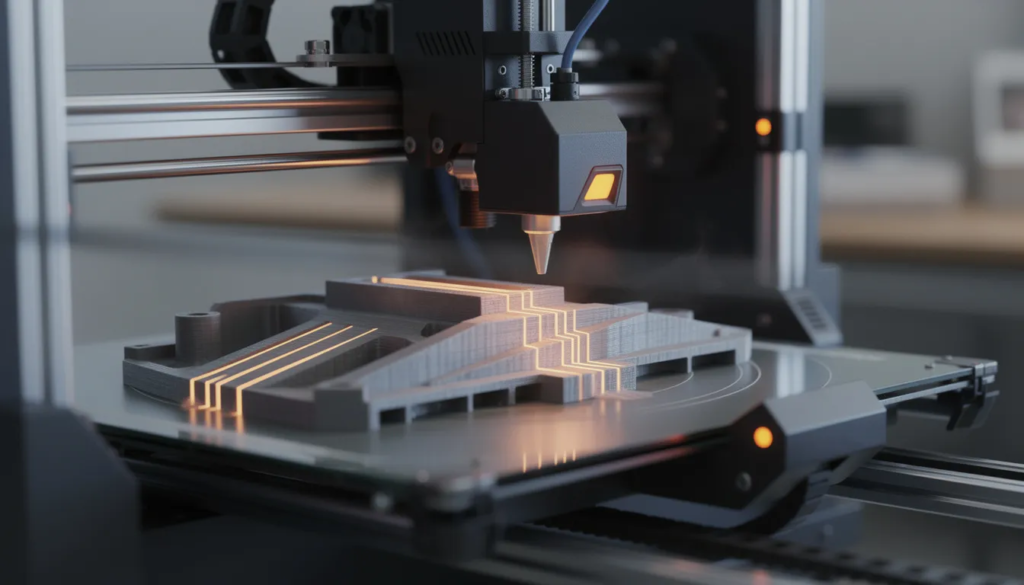
3DDFM can directly turn CAD into physical parts using in-house or closely integrated 3D printing services. Different technologies serve different purposes:
Technology | Best For |
|---|---|
FDM (Fused Deposition Modeling) | Quick form models, checking size and basic fit |
SLA (Stereolithography) | Fine detail parts, smooth surfaces, small features |
SLS/MJF (Selective Laser Sintering/Multi Jet Fusion) | Robust functional prototypes, living hinges, snap-fits |
Prototype Scenarios in Practice
Consider these practical applications:
3D printing a snap-fit housing in nylon before committing to an injection mold ($50 prototype vs. $15,000 mold modification)
Printing a sheet metal mimic in resin to test assembly sequence in a lab before ordering fabricated parts
Creating multiple design iterations of a physical model in days to test with pilot users
The Power of Integration
Having DFM expertise and 3D printing together shortens the iteration loop dramatically. At 3DDFM, design is updated, printed, tested, and refined—sometimes in days rather than the weeks that remote, fragmented workflows often require. This speed advantage compounds over multiple iterations.
When it’s time to move beyond 3D printing, we help clients transition to “production-intent” prototypes:
CNC machined aluminum brackets for testing with actual loads
Soft-tool injection molded parts for limited production validation
Short-run sheet metal parts for pilot customer programs
To optimize these processes for efficiency and cost savings, it’s essential to apply Design for Manufacturing principles.
The best bet for most clients is starting with rapid 3D printing for concept validation, then moving to production-intent prototypes once the design is stable.
Planning for Tooling, Manufacturing, and Scale-Up
Moving from a successful prototype to consistent production requires decisions about tooling, suppliers, quality control, and logistics. This is where many inventors—and even established companies—run into trouble without proper planning.
Volume and Timeline Drive Everything
Your target volumes and launch dates fundamentally change your manufacturing approach:
Scenario | Typical Approach |
|---|---|
1,000 units in Q4 2025 | Consider prototype or “bridge” tooling, simpler processes, possibly domestic manufacturers for speed |
100,000 units in 2026 | Invest in production-grade tooling, optimize for cycle time and yield, consider international manufacturers for cost |
500 units/year ongoing | Evaluate 3D printing or low-volume molding vs. traditional tooling based on total cost |
Shipping costs, order placement logistics, and minimum commitment requirements all factor into the domestic vs. international decision. Small manufacturers may offer flexibility for custom orders but lack capacity for large runs. |
What 3DDFM Provides for Manufacturing Handoff
We support the transition to manufacturing with:
Manufacturing-ready drawings with GD&T (Geometric Dimensioning and Tolerancing)
Complete BOMs (Bill of Materials) with material specifications
Assembly documentation and sequence instructions
Process notes tailored to injection molders, sheet metal shops, or die casters
Defect policy recommendations and quality control inspection criteria
Design for Assembly (DFA)
Beyond individual part manufacturability, we help optimize assembly:
Reducing screw count to speed assembly
Standardizing fasteners across the product
Designing locating features for foolproof orientation
Planning for efficient jigs and fixtures
Outlining expectations for factory conditions and worker skill levels
By involving DFM and industrial design from day one, many clients avoid multiple tool reworks and can hit pilot production on schedule—critical for regulatory approvals or trade show deadlines.
How 3DDFM (BP Nel Consulting) Helps with Invention Ideas End-to-End
3DDFM combines industrial design, Design for Manufacture, and 3D printing/rapid prototyping as a single integrated service. Unlike industrial design firms that hand off to separate engineering houses, or prototype shops that don’t understand production requirements, we handle the complete invention journey from concept to manufacturing-ready deliverables.
Our Typical Engagement Flow
Initial consultation and requirements capture: We discuss your product idea, target market, volume expectations, and constraints. We create a structured design brief.
Concept and industrial design: We explore form factors, user interactions, and aesthetic direction while keeping manufacturing in mind.
DFM-optimized CAD modeling: We develop parametric 3D models designed for your target manufacturing process—whether injection molding, sheet metal, die casting, or other methods.
Rapid prototyping: We produce 3D printed parts for validation, testing, and stakeholder presentations.
Refinement: We iterate based on prototype testing, user feedback, and due diligence reviews.
Manufacturing handoff: We deliver complete documentation packages ready for production tooling and manufacturing.
Industries We Serve
With 30 years of product development experience, we regularly work in:
Medical devices: Enclosures, fixtures, surgical tool housings, diagnostic equipment housings
Automotive and industrial: Brackets, housings, guards, control panels, sensor enclosures
Consumer electronics: Handheld units, docking stations, wearable device housings, IoT enclosures
Why “Under One Roof” Matters
When an engineering team brings us a new sensor enclosure concept, for example, we can:
Capture requirements and start creating industrial design concepts in week one
Develop DFM-optimized CAD using our templates and process knowledge
3D print verification parts within days of CAD completion
Identify and fix manufacturability issues before committing to tooling
Deliver a complete manufacturing package ready for mold quotes
Teams working this way have cut their time-to-tooling by several weeks compared to working with separate design, engineering, and prototyping vendors. Fewer handoffs mean fewer misunderstandings, and faster iteration cycles mean you can start creating a better product in less time.
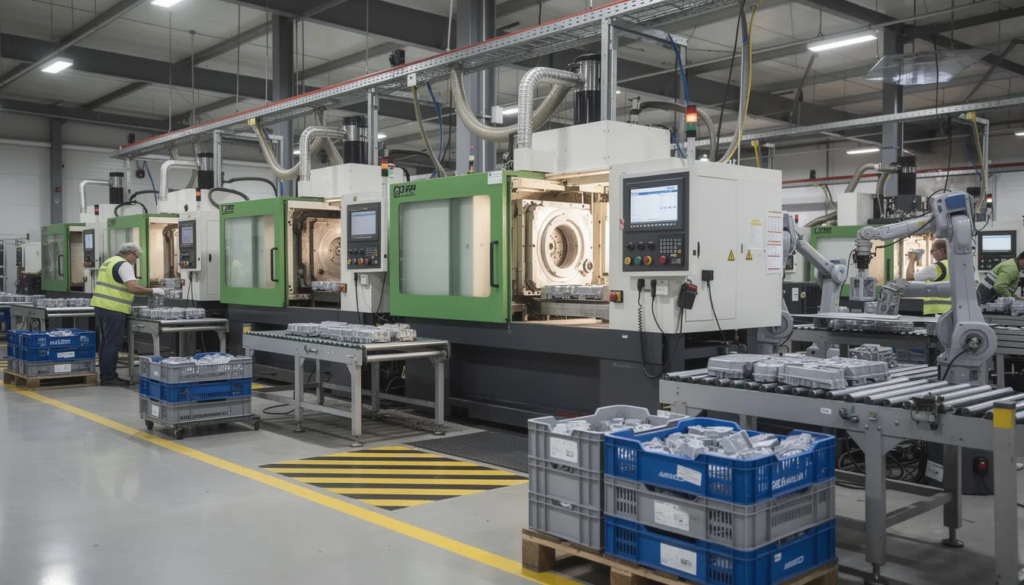
Conclusion and Call to Action
Invention success depends on clear problem framing, solid industrial design, rigorous DFM, and fast prototype cycles—not just on having a great invention idea. Most inventors struggle not because their ideas lack merit, but because they don’t have a clear path from concept to manufacturable product.
Combining industrial design, DFM expertise, and 3D printing services with 3DDFM dramatically accelerates product development and reduces both risk and cost compared to working with separate vendors. Our 30 years of experience means we’ve seen what works—and what leads to expensive redesigns—across thousands of projects in medical devices, automotive, industrial equipment, and consumer electronics.
Ready to bring your invention to life?
Whether you’re a startup founder with a breakthrough concept or an engineering leader at an established company developing a new product line, 3DDFM can help you move from idea to factory-ready design.
Here’s how to get started:
Share your sketches, early CAD files, or requirements with us
We’ll provide a realistic DFM assessment, timeline, and prototype plan
Together, we’ll build a roadmap for your successful product launch
Don’t let your 2024–2025 invention ideas sit in a bound notebook or a forgotten folder on your laptop. A great idea deserves a business plan for getting it made. Contact 3DDFM today to turn your invention into a manufacturable product.
FAQ: Help with Invention Ideas
Can you help if I only have rough sketches and no CAD files yet?
Yes, absolutely. 3DDFM frequently starts from hand sketches, simple PowerPoint diagrams, or basic mock-ups. Many of our clients come to us with just an idea and a vision. We develop the full industrial design and CAD models from there, working collaboratively with you to capture your design intent while ensuring the result is manufacturable.
Do you work with individual inventors, or only with established companies?
While our core clients are engineering teams in medium to large companies, we also collaborate with serious individual inventors and startups who are committed to getting to a manufacturable, production-ready design. The key factor is commitment to moving forward with a real product—not just seeking validation for a concept. Aspiring inventors with concrete goals and realistic budgets are welcome.
Can 3DDFM handle patent filing or legal protection for my invention?
No, we do not provide legal or patent filing services. However, our detailed CAD models, exploded views, engineering drawings, and DFM documentation can support your patent attorney or IP firm in preparing strong applications. Many clients use our drawings to illustrate their official patent claim and inventive features. We recommend working with qualified IP counsel and potentially signing a non-disclosure agreement before sharing sensitive details with any partner.
What industries and materials do you typically design for?
We regularly work in medical devices, automotive, industrial equipment, and consumer electronics. Our material expertise covers plastics (injection molding and blow molding), metals (sheet metal fabrication, die casting, CNC machined parts), and 3D printed polymers for prototypes. We design for processes including injection molding, sheet metal, die casting, extrusion, and additive manufacturing.
How long does it usually take to go from idea to a functional prototype?
Timelines typically range from 4–12 weeks depending on complexity, number of components, and how well-defined your requirements are at the start. Having industrial design, DFM, and 3D printing together under one roof often lets us deliver testable prototypes in a few iterative cycles without the long delays common when working with multiple separate vendors. For an improved version of an existing product, timelines are often shorter than for entirely new concepts.
Manufacturing Engineering Services:
Injection Molding Design
Electronic Enclosure Design
Sheet Metal Design
Design for Manufacturing Consulting